Using Technological Lessons from Moore’s Law to Help Engineer the Optical Coating Factory of the Future
Presented by:
Paul Stupik, Alio LabsOptical component manufacturing remains largely craft-based, while semiconductor fabrication has made process control, metrology feedback, and standard automation practice. As optical filters grow more complex and performance requirements tighten, traditional approaches increasingly limit repeatability and scalability.
Using a greenfield factory as a case study, this presentation explores how semiconductor manufacturing principles can be applied to thin-film optics. The architecture combines instrumented process control, robotically linked modular work cells, MES orchestration, closed-loop metrology, and machine-learning-driven recipe optimization and predictive maintenance.
Attendees will learn how these principles can reduce variability, accelerate process development, improve yield and reproducibility, and scale complex coatings into production, providing a path toward semiconductor-grade process discipline for the next generation of optical filters.
About the presenter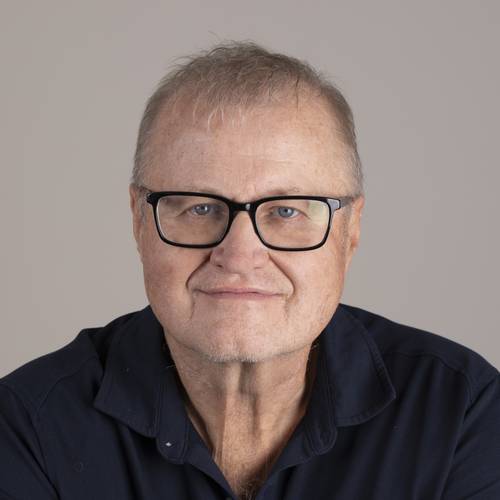
Paul Stupik, Ph.D., brings over three decades of expertise in optical coatings to his role as vice president of quality and operations at Alio Labs. His journey into optics began at Ditric Optics, where hands-on work with thermal evaporators sparked a lasting passion for the science of thin-film coatings.
He holds a doctorate in inorganic chemistry, with doctoral research focused on Mössbauer spectroscopy and magnetic studies of iron compounds, followed by postdoctoral work at Harvard University developing MOCVD techniques and thin-film characterization methods.
Stupik’s career has been marked by both technical innovation and leadership. He conducted pioneering work in coatings for wavelength division multiplexors alongside Michael Scobey,