Presentation will begin: Thursday, October 22, 2026 - 10:35 AM
Design and Development of Conical Calibration Targets for Semi-Circular Multi-Camera Systems
Presented by:
Yung-Hsiang Chen, National Chung-Shan Institute of Science and Technology (NCSIST)Due to the limitations in camera resolution and field of view (FOV) of currently available commercial multi-camera systems, the full-field potential of optical techniques cannot be fully realized for deformation measurements of large-scale structures. Image stitching and/or three-dimensional (3-D) spatial data reconstruction must therefore be performed to ensure the accuracy of camera calibration and image reconstruction. In fact, the accuracy of spatial data reconstruction is closely related to the accuracy of camera calibration. Appropriate and effective calibration procedures and methods are therefore essential for achieving accurate and reliable measurements.
In this presentation, a novel conic calibration target (CCT) is proposed for determining the intrinsic and extrinsic calibration parameters of semi-circular multi-camera systems. Multiple cameras are mounted on the arms of a versatile mounting frame designed for a geometrically related multi-camera configuration. To acquire images of the calibration target from different viewing angles, the cameras can be freely moved along the arms of the mounting frame to selected positions for image acquisition. The fundamental principles of three types of calibration targets—conical, cylindrical, and hemispherical—are developed. The proposed calibration targets can be defined using either cylindrical or spherical coordinate systems.
The conic calibration target is defined by a set of spatial coordinates in a polar or spherical coordinate system, where each coordinate is represented by a radius and an angular parameter. The characteristics of the proposed conical calibration target include axisymmetry, uniqueness of the calibration solution, flexibility, and portability. In this study, spatial data associated with three different calibration targets were generated and projected onto the image planes of three cameras in the semi-circular multi-camera system.
The three cameras were positioned at three different locations along a planar circular trajectory using the pinhole camera model. The accuracy of the reconstructed spatial data was evaluated by comparing the reconstructed results obtained from the step-height object and the proposed calibration targets. The experimental results showed that the deviations of the reconstructed spatial data were small for all three types of calibration targets, indicating that the proposed conical, cylindrical, and hemispherical calibration targets can all be effectively used for multi-camera calibration.
About the presenter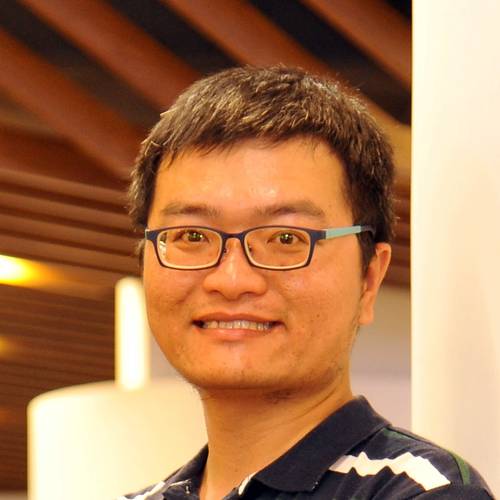
Yung-Hsiang Chen, Ph.D., has more than seven years of engineering experience at the National Chung-Shan Institute of Science and Technology (NCSIST). He also served as an associate engineer and project manager at the National Applied Research Laboratories (NARLabs) for 12 years. His research interests include optical technologies, machine vision, automated optical inspection (AOI) systems, metrology, and measurement systems. He has received several prestigious awards, including the Outstanding Engineer Award from the Chinese Institute of Engineers (CIE), the Outstanding Metrology Engineer Award from the Chinese Metrology Society (CMS), and the International Outstanding Inventor Lifetime Achievement Award from the International Inventor Prize (IIP).
He received his doctorate in mechanical and aeronautical engineering from Feng Chia University. He is also a doctoral candidate in power mechanical engineering at National Tsing Hua University. He received his M.S. degree in electrical engineering and B.S. degree in industrial education and technology from National Changhua University of Education.