Presentation will begin: Wednesday, August 5, 2026 - 12:20 PM
Securing the Quantum Supply Chain: Design Lessons from Scaling Precision Laser Sources
Presented by:
Saeed Pegahan, Modulight USAPhotonics-based quantum computers, including neutral atom arrays and trapped ion systems, are increasingly constrained by laser power as qubit counts scale. Each processor requires tens of stabilized optical beams across multiple precision wavelengths, and the power available per qubit, whether per tweezer site or per addressing channel, sets a hard ceiling on how many qubits can be loaded, controlled, and read out in parallel. The same wavelengths drive next-generation atomic clocks and magnetometers, where lab-grade performance must now fit inside compact, low-SWaP, field-deployable hardware. Both directions surface a shared bottleneck for system architects: securing scalable, reliable sources of multiple precision wavelengths that meet specification today and remain viable across long-term product roadmaps.
This webinar examines the design tradeoffs and engineering lessons that have emerged as the field scales. Pegahan will look at three laser technology families anchoring most quantum photonics architectures: VCSELs, single-frequency diode lasers extended to watt-class output via tapered amplifiers, and VECSELs, examining the regimes where each fits the application. For each platform, he will walk through the practical considerations that drive system-level choices: where footprint and power efficiency dominate; how to push narrow-linewidth diode platforms across the main cooling, trapping, and excitation transitions without losing spectral purity; and when extended wavelength access via intracavity frequency conversion justifies the added complexity.
The presentation closes with lessons from the supply-chain side of the problem: why scaling quantum systems is increasingly a manufacturing and qualification challenge as much as a photonics one, what it takes to keep a precision wavelength viable across a full product lifecycle, and how vertically integrated semiconductor processes are reshaping the economics of moving from lab prototype to deployable system. The goal is to give system architects in both quantum computing and sensing a clearer framework for evaluating laser choices, and the broader community an honest picture of where the bottlenecks are actually rooted.
About the presenter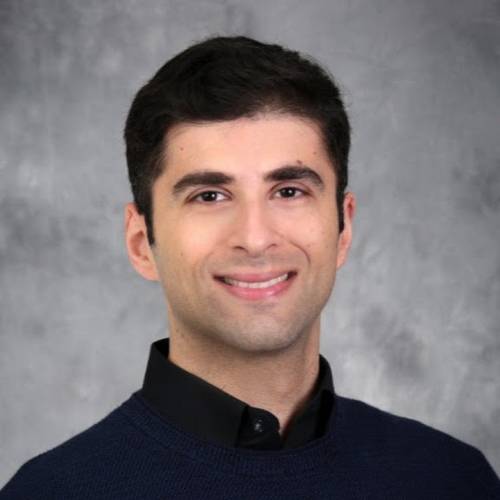
Saeed Pegahan, Ph.D., is an experimental physicist leading applications engineering and business development for quantum and semiconductor technologies at Modulight USA, the US subsidiary of Modulight Corporation, headquartered in Finland.
He works directly with a broad range of customers across quantum computing, sensing, telecom, defense, and the broader photonics industry to translate system-level requirements into laser source specifications, guiding programs from wavelength and semiconductor chip selection through prototype delivery and into volume production.
Pegahan’s work focuses on programs and applications involving single-frequency and multimode lasers, VCSELs, and high-power VECSELs, among others, spanning the visible, telecom and mid-IR wavelengths central to these markets. With over three years in the laser and photonics industry and more than a decade in quantum research spanning atom cooling and trapping, Rydberg sensing, and optical frequency combs and precision timing, he has served as Chair and Vice Chair of the Enabling Technologies Technical Advisory Committee (TAC) at the Quantum Economic Development Consortium (QED-C), helping strengthen the US quantum supply chain, and is an active member of SPIE and APS.
He has received numerous awards, including the Sigma Xi Research Award from North Carolina State University and the APS 5 Sigma Physicist Award for his advocacy of the Keep STEM Talent Act. He earned his doctorate in ultracold atomic physics from North Carolina State University.