Presentation will begin: Wednesday, November 18, 2026 - 11:25 AM
Beyond Tool Hopping: Unifying Geometrical and Physical Optics on One Platform
Presented by:
Frank Wyrowski, LightTrans InternationalMost optical engineers face the same frustration: Ray tracing is fast but ignores diffraction. And diffraction occurs not only at the aperture pupil but also at many surfaces, edges, and apertures throughout a system.
At the same time, the growing number of sophisticated components — including microstructures, diffractive surfaces, metasurfaces, crystals, fibers, waveguides, and gratings — demands physical optics modeling in a system context.
The result is a fragmented workflow: one tool for rays, another for fields, and little hope of connecting them in a meaningful way.
The real problem is not speed versus accuracy — it is a conceptual divide. Geometrical optics and physical optics are still treated as separate worlds in textbooks, in software, and in our daily work. But they do not have to be.
In this webinar, Wyrowski takes a step back and looks at the theoretical and algorithmic relationship between geometrical and physical optics from a fresh perspective. He shows how geometrical optics can be embedded in physical optics — not as a compromise, but as a natural consequence of a unifying approach.
Once this is understood, a system simulation that seamlessly combines the concepts of geometrical and physical optics in the different regions of the system where they matter follows naturally.
As is often the case in science: From the right point of view, things become much easier. And optics can show its full beauty.
About the presenter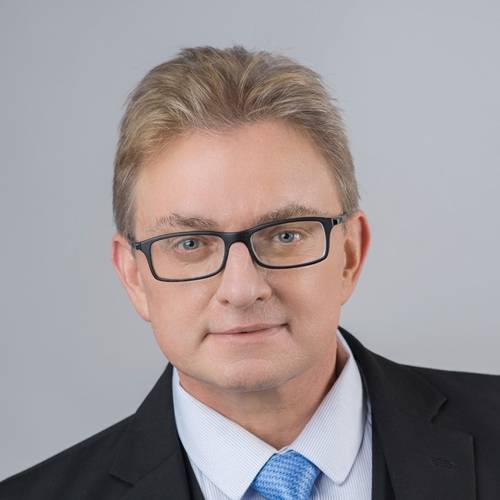
Frank Wyrowski, Ph.D., cofounded LightTrans International GmbH in 1999 and Wyrowski Photonics GmbH in 2014. In 2022, he cofounded Beijing Luoxun Technology Co. Ltd. He is recognized as a pioneer in the advancement of modern optical modeling and design software.
Wyrowski’s main objective in research and development is to improve the precision and effectiveness of optical modeling software, guided by the principle of achieving the required level of accuracy while maximizing speed. This includes integrating various modeling techniques, ranging from geometrical to physical optics, into a single platform. This core concept underpins the VirtualLab technology, which is integrated into the VirtualLab Fusion software. The concept of connecting interoperable modeling techniques within a single software platform allows VirtualLab Fusion to effectively address the wide array of modeling and design challenges in contemporary optics and photonics, benefiting an expanding user base.
Wyrowski obtained his doctoral degree in applied physics from the University of Essen, Germany, in 1988, with a dissertation on digital signal encoding in optical information technology. In 1992, he earned his Dr. habil. from the same university with a thesis focusing on diffractive optics and holography. He later joined Philips Company in Eindhoven, the Netherlands, where he worked on laser materials processing incorporating diffractive optics and diffusers.
In 1994, he took over the management of the Department for Holography and Diffractive Optics at Berlin Institute of Optics GmbH in Germany. Then, in 1996, he was named a professor of technical physics at the Friedrich-Schiller-University of Jena, Germany. He currently serves as the president of LightTrans International GmbH and has served as CTO of Wyrowski Photonics GmbH since April 2024.
Wyrowski has authored more than 100 articles covering optical modeling and design, diffractive optics, holography, information processing, and halftoning. He is co-editor (alongside J. Turunen) of the book Diffractive Optics for Industrial and Commercial Applications. In 2004, he was honored as a fellow of SPIE. He also served on the board of directors of SPIE from 2003 to 2005. In 2013, he was appointed a visiting professor at the Chinese Academy of Sciences and a guest professor at Harbin Institute of Technology (HIT).