Lavine describes a new infrared (IR) imaging-based approach to automotive paint forensic analysis. He shares an experiment in which spectral data from all of the layers in a cross-sectioned intact multilayered OEM paint chip was collected in a single analysis by scanning across each layer using an IR transmission microscope. By applying alternating least squares (ALS) to line maps of the IR spectral images, the pure spectrum of each layer was recovered. Lavine’s group demonstrated that this ALS-reconstructed IR spectra can be used to identify the correct make, model, and year of the vehicle from which the paint chip came, within a limited production year range, by comparing the reconstructed IR spectrum of each paint layer against an IR spectral library that originated from an in-house automotive paint database.
Pattern recognition techniques could then be applied to the library search performed against the database. These techniques were used to develop search prefilters that identified the assembly of the vehicle from which a paint chip originated.
The imaging approach to IR analysis of automotive paint that Lavine presents not only saves time in forensic analysis by eliminating the need to analyze each layer of paint separately, but it also ensures that the final spectrum of each layer is pure and not a mixture.
About the presenter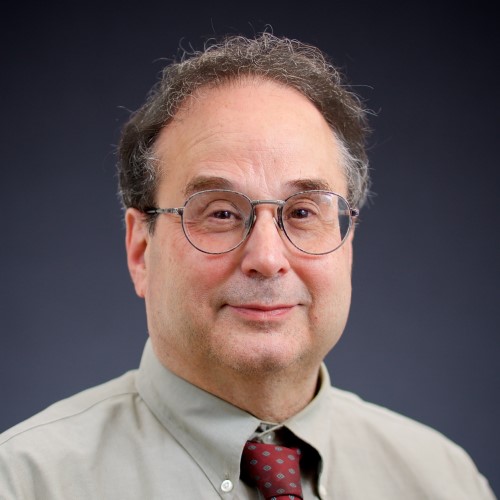
Barry K. Lavine, Ph.D., is a regents professor of chemistry at Oklahoma State University (OSU), where he teaches and performs research in analytical chemistry. His research interests encompass many aspects of analytical chemistry, including IR and Raman spectroscopy, forensic chemistry, and data-driven science such as pattern recognition, multivariate curve resolution, multivariate calibration, genetic algorithms, and other evolutionary techniques. Lavine graduated with a doctorate in analytical chemistry from The Pennsylvania State University (Penn State) in 1986. He has published approximately 120 research papers, 22 book chapters, and 15 review articles, and he has edited three books. He has been or is on the editorial board of several journals, including
Chemometrics and Intelligent Laboratory Instrumentation Systems, the
Journal of Chemical Information and Computer Sciences,
Analytical Letters, the
Journal of Chemometrics, the
Microchemical Journal, the
Journal of Chemoinformatics,
Advances in Chemoinformatics and Computational Methods,
Applied Spectroscopy Reviews, the
Journal of Spectroscopy,
Sensors, and a
Chemometrics series by CRC Press. Lavine is also assistant editor of chemometrics for
Analytical Letters. In 2015, he was awarded the Kowalski Prize by the
Journal of Chemometrics for the best chemometrics paper, and he was elected a fellow of the Society of Applied Spectroscopy (SAS) in 2016. He received the EAS Award in Chemometrics in 2017.