Physics-Guided AI for Depth-Resolved Fluorescence-Guided Surgery
Physics-Guided AI for Depth-Resolved Fluorescence-Guided Surgery
Presented by:
Ismail Erbas, Rensselaer Polytechnic InstituteFluorescence-guided surgery (FGS) holds tremendous promise for improving surgical precision and patient outcomes, yet its clinical translation is hindered by the inherent ambiguity of intensity-based fluorescence imaging in scattering tissue, which provides limited information about subsurface targets.
Fluorescence lifetime imaging (FLI) offers a more specific and robust contrast mechanism, and when combined with time-resolved large-field-of-view macroscopic detection, it further enables estimation of subsurface target depth through fluorescence detection and ranging (FLiDAR), two capabilities that are highly complementary in the intraoperative setting.
This presentation will provide an accessible overview of a physics-aware artificial intelligence framework that jointly infers target depth and fluorescence lifetime from time-resolved FLI data without requiring prior knowledge of tissue optical properties. By embedding the physics of photon propagation in scattering media directly into the model architecture, exploiting the distinct information encoded across different temporal regimes of the fluorescence signal, the system produces both quantitative estimates and associated confidence metrics, enabling clinically meaningful predictions alongside a measure of their reliability.
About the presenter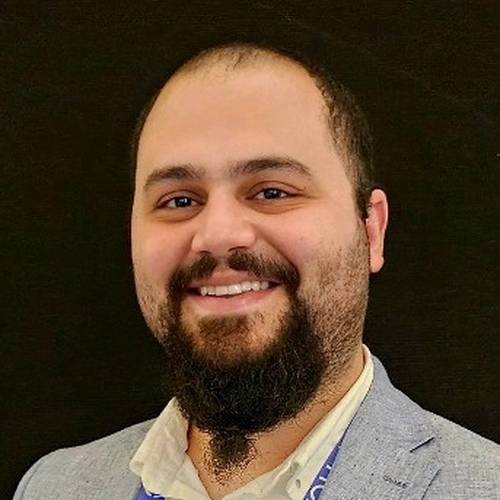
Ismail Erbas is a Ph.D. candidate in biomedical engineering at Rensselaer Polytechnic Institute, where he works in the Functional & Molecular Optical Imaging Laboratory under Professor Xavier Intes. His research centers on developing smart cameras and deep learning frameworks for real-time fluorescence lifetime imaging (FLI), with applications spanning preclinical cancer studies and fluorescence-guided surgery.
His work sits at the intersection of advanced optical instrumentation and machine learning, from FPGA-accelerated neural networks enabling on-device real-time FLI, to single-snapshot SPAD-based imaging systems for surgical guidance. He has published across venues including ACM FPGA, NeurIPS, and Journal of Biophotonics, and was recognized with the RPI Founders Award and an RPI Student Spotlight distinction.
Search for more products and services

We use cookies to improve user experience and analyze our website traffic as stated in our
Privacy Policy. By using this website, you agree to the use of
cookies unless you have disabled them.