Optical Spectroscopic Assay Nondestructively Measures Key Metabolic Parameters
Optical Spectroscopic Assay Nondestructively Measures Key Metabolic Parameters
Presented by:
Caigang Zhu, University of KentuckyTo maximize cancer patients’ survival, in vitro cancer cells and newly developed patient-derived organotypic tumor models are widely used to investigate the role of metabolism reprogramming in tumor growth and survival in response to therapeutic intervention. Conducting longitudinal metabolic measurements on the same sample during the course of cancer therapy is critical for therapeutic studies, but there are surprisingly few techniques available to enable non-destructive metabolic measurements on in vitro cells or organotypic tumor models. To enable non-destructive metabolic characterizations, a point-of-care optical metabolic assay has been developed for simultaneous measurements of glucose uptake and mitochondrial functions on various cancer models with high sensitivity. In vitro cell studies showed MCF-7 breast cancer cells have higher mitochondrial metabolism, but lower glucose uptake compared to MDA-MB-231 breast cancer cells. This data is consistent with studies done in Zhu’s lab using microscopy imaging and flow cytometry as well as the published Seahorse Assay data.
Moreover, the optical assay can measure both glucose uptake and mitochondrial metabolism on the same cancer cell samples at one time. The pilot tests on both animal tumor samples and human patient tumor samples showed that the optical assay captured increased metabolic activities in tumor slices compared to normal tissue slices. The non-destructive optical metabolic assay used by Zhu’s team may provide a new way to enable longitudinal therapeutic pre-evaluation studies through the lens of tumor energetics, which can capture drug responses and provide personalized therapy design.
About the presenter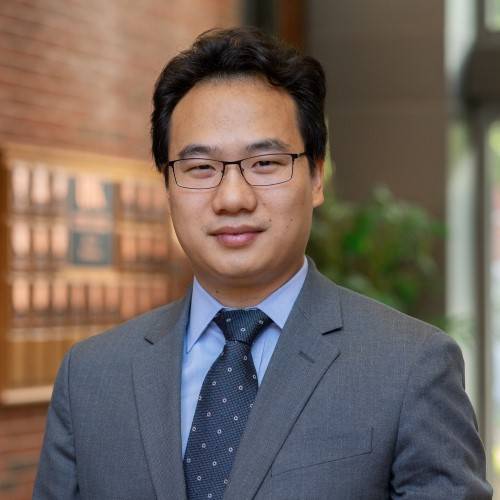
Caigang Zhu, Ph.D., received his bachelor's degree from Huazhong University of Science and Technology in Wuhan, China, and his doctorate from Nanyang Technological University in Singapore. He did postdoctoral work at Duke University and is currently an assistant professor in the Department of biomedical engineering at the University of Kentucky.
Zhu's research program at the university focuses on developing and applying novel point-of-care optical metabolic techniques that can be applied on different cancer models that vary from in vitro cell models to patient-organotypic tumor models and in vivo animal tumor models. The goals of the lab research are to first, understand the therapeutic resistance mechanism for human cancers and second, to identify or evaluate therapeutic targets related to the tumor metabolism and microenvironment in biological models.
Search for more products and services

We use cookies to improve user experience and analyze our website traffic as stated in our
Privacy Policy. By using this website, you agree to the use of
cookies unless you have disabled them.